
Sanctions, PEP, and adverse media in the same place as your crypto data.
Cali OSINT Intelligence is the open-source intelligence surface of the Cali Technologies investigation platform. It consolidates sanctions, PEP, adverse media, complaints, and community intelligence for names, entities, handles, domains, and victim systems linked to your crypto investigations.
The goal: provide a focused, case-ready OSINT posture you can reference in reviews, case notes, and reports.
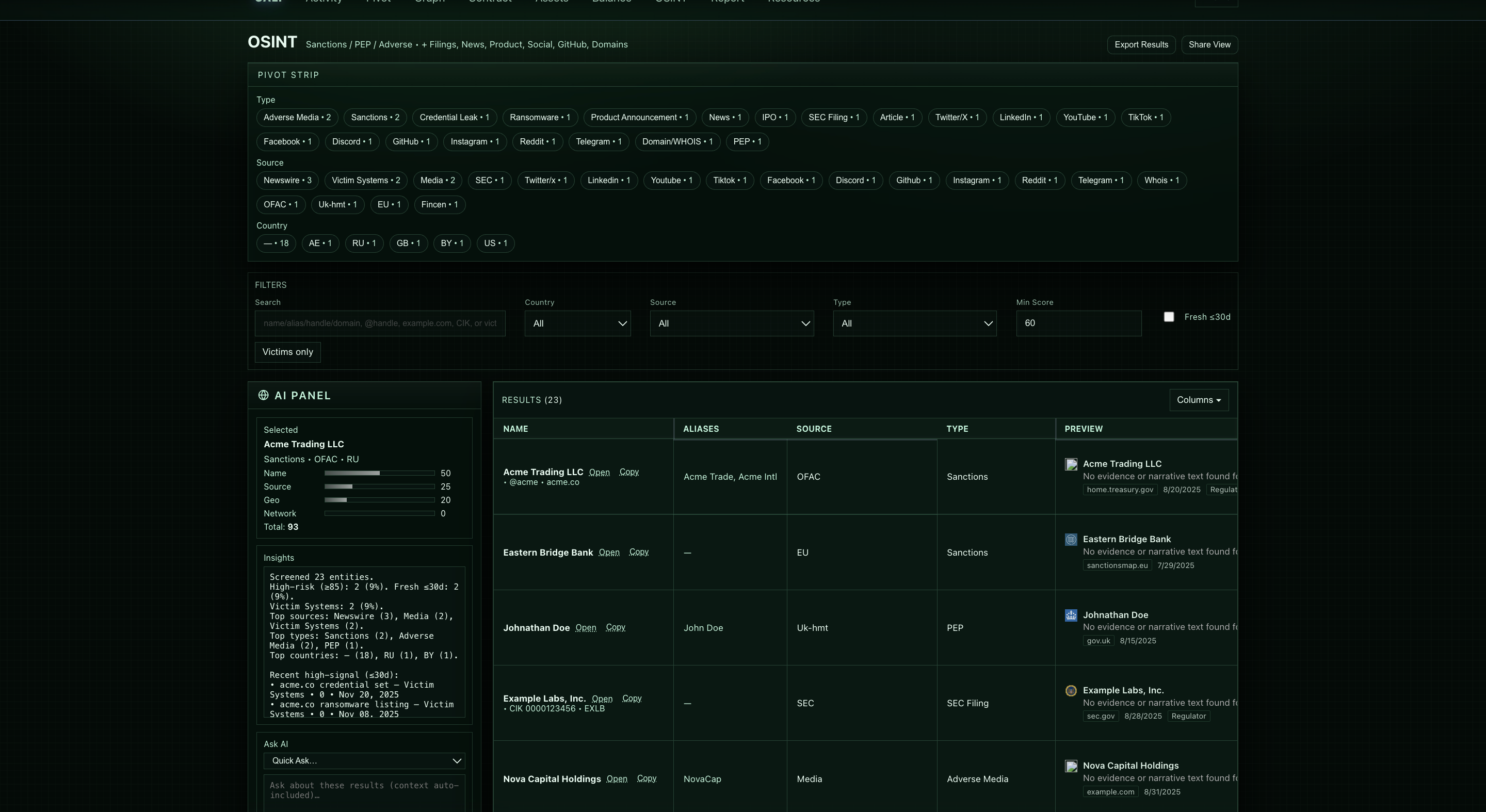
Risk decisions rely on external intel—sanctions, adverse media, fraud databases, hack lists, and victim reports. Most teams manually search and copy/paste into spreadsheets.
- Consolidates external risk data
- Reduces analyst workload
- Improves investigation consistency
- Sanctions, complaints, adverse media, and victim-system references.
- Names, handles, domains, addresses, and entity-linked indicators.
- Source-backed context that supports escalation and documentation.
- External signals that help explain why an entity or wallet matters.
- Sanctions + watchlist matching
- Adverse media context
- Entity reputation scoring
- Cryptocurrency fraud/victim exposure checks
- Structured findings and analysis notes
A wallet appears benign but OSINT shows multiple fraud reports and links to a fake exchange domain. OSINT surfaces the match instantly → Activity flags → case escalates.
- Centralizes sanctions, PEP, adverse media, and selected open-source signals in one posture view.
- Supports screening of names, entities, handles, domains, and other identifiers associated with wallets and flows.
- Tracks victim systems and complaints related to particular entities or schemes.
- Links OSINT posture back to wallets, transactions, and graphs in the Cali platform.
- Compliance teams conducting sanctions and PEP screening alongside crypto investigations.
- Investigators, forensics teams, and law enforcement building cases around entities, scams, and campaigns.
- Independent analysts and boutiques that need a structured way to record and reuse OSINT findings.
- Risk and policy teams preparing briefings for management or regulators.
The OSINT Cali Panel helps convert scattered signals into a coherent posture and case narrative you can use in casework.
- Summarizes sanctions, PEP, adverse media, and other evidence into a concise entity profile.
- Distinguishes between allegations, confirmed actions, regulatory findings, and general commentary where possible.
- Suggests how to describe OSINT posture in an internal or regulatory-facing document.
- Helps keep track of what is known, what is uncertain, and what still needs checking.
Outputs are designed to be reviewed and edited by analysts—Cali does not replace your screening policy or local requirements.
OSINT Intelligence is centered on evidence and posture, not only "hit / no hit" responses.
- Store and revisit key articles, advisories, and records associated with an entity.
- Document why an analyst treated a match as relevant, coincidental, or out of scope.
- Keep victim complaints and reports close to the entities and flows they concern.
- Use posture views as a repeatable reference for recurring names and entities in your program.
OSINT Intelligence runs alongside activity, provenance, balances, and assets to help you see people and entities, not just wallets and flows.
- Start in Activity and Graph to identify wallets and flows, then move to OSINT Intelligence to understand entities and posture.
- Combine with Balance, Assets, and Contract Intelligence to understand how on-chain exposure aligns with OSINT risk.
- Bring OSINT posture into Investigative Reports when assembling SARs, affidavits, and briefings.
See how OSINT posture changes your view of a case.
We recommend starting with entities and names that already feature in your program—repeat subjects, recurring counterparties, or known scam clusters. That's where Cali OSINT Intelligence can add structure and clarity fastest.